A Surprising Consequence of Global Warming: A Trillion-Dollar Crisis

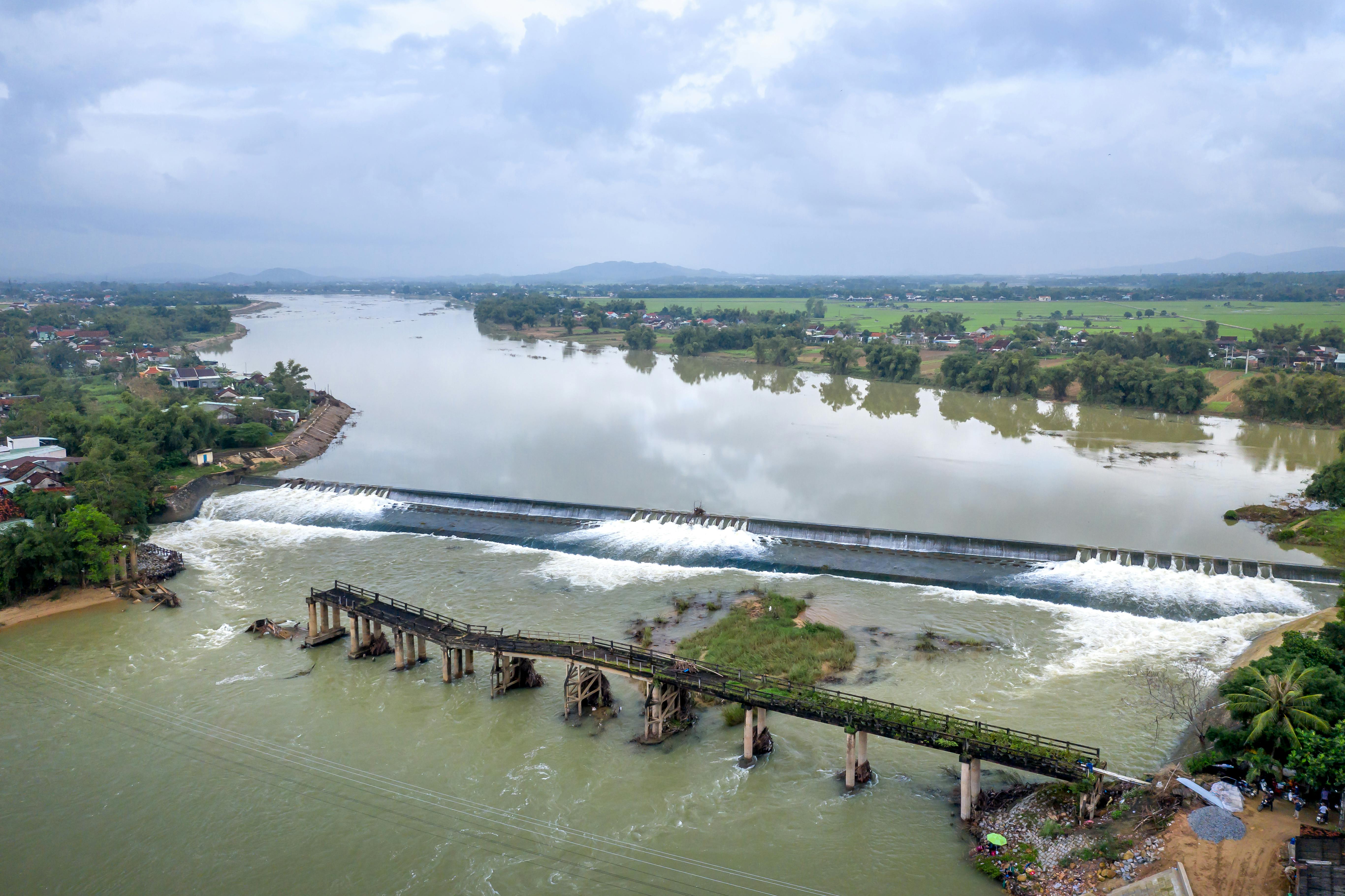
A new report reveals that critical U.S. infrastructure, including dams, levees, and wastewater systems, is in poor to fair condition, receiving alarming D to D+ grades. Upgrades needed could cost nearly $1 trillion. This dire situation is made worse by climate change, which is increasing the frequency and intensity of heavy rainfall, putting immense strain on aging systems not designed for today's extreme weather. Ignoring these issues poses a serious risk to public safety and economic stability across the nation.
America’s essential water infrastructure is in trouble, according to the latest Report Card for America’s Infrastructure from the American Society of Civil Engineers (ASCE). While the overall infrastructure grade saw a slight improvement, critical components like dams, levees, stormwater, and wastewater systems were still graded D to D+. This poor assessment is especially concerning because climate change is already causing more intense precipitation, pushing these systems to their breaking point.
A “D” grade means infrastructure is mostly below standard, showing significant deterioration and a strong risk of failure. This isn’t a new problem; U.S. dams have consistently received D or D+ grades since 1998. The ASCE estimates that over $165 billion is needed for dams, more than $70 billion for levees, and a staggering $690 billion for wastewater and stormwater systems by 2044 – a total approaching $1 trillion in necessary investments.
Increased rainfall, partly due to climate change, is already causing an additional $2.5 billion in U.S. flood damages annually, according to a January 2021 study from Stanford University climate scientists. This means that more than a third of flood damage between 1988 and 2017 was directly linked to heavier downpours. It's not just a political issue; it's an economic reality that ignoring climate change will lead to higher costs, as noted by study co-author Noel Diffenbaugh.
The nation’s dams are particularly vulnerable. The average U.S. dam is 64 years old, though they were typically designed for a 50-year lifespan. More than 70% of dams are over this age, and approximately 75% of all U.S. dam failures have occurred in structures older than 50 years. Recent years have seen numerous failures and near-failures, like the Rapidan Dam in Minnesota in 2024 and the Edenville and Sanford Dams in Michigan in 2020, often following severe rainstorms. Sediment buildup and increased debris from wildfires also reduce capacity, making old dams even riskier.
Levees, which protect 23 million Americans, also received a D+ grade. Many of the nation’s 40,000 miles of levees are over 60 years old and were not built to current standards. Similarly, wastewater and stormwater systems face a massive funding gap. While annual capital needs are $99 billion, only $30 billion is currently funded, creating a projected shortfall of over $690 billion by 2044.
Addressing these issues requires smart, forward-thinking investments. Simply rebuilding old infrastructure in the same way won't suffice. Experts like Robert Young of Coastal Carolina University argue that we must stop putting new infrastructure in harm’s way, especially in areas highly vulnerable to rising sea levels or extreme weather. For example, some investments in the Florida Keys were found to be financially unsound, yielding only 41 cents in avoided damages for every dollar spent, unlike more cost-effective solutions in other areas. It’s crucial that funding focuses on resilience and adapts to the realities of a changing climate, rather than just patching up past problems.