Burying Burned Forests For Profit: Climate Fix Or Folly?
On a family ranch in south-central Montana, a new climate experiment is unfolding beneath a grassy hillside. After the 2021 PF Fire killed more than 50,000 ponderosa pines, Mast Reforestation worked with landowner Rebecca Gentry to dig a 22-foot pit and bury over 10 million pounds of charred trees, sealing them under soil, gravel and plastic so their carbon cannot easily escape. The company will turn that buried wood into roughly 5,000 tons of carbon removal credits, potentially selling them for around $100–200 per ton, with the revenue funding replanting across the burn scar. Similar “biomass burial” projects from companies like Graphyte and Wood Cache promise durable, relatively low-tech carbon storage. But experts warn that this tool is only truly climate-positive when it uses genuine waste wood, is rigorously monitored for centuries and, crucially, does not distract from the urgent work of phasing out fossil fuels.
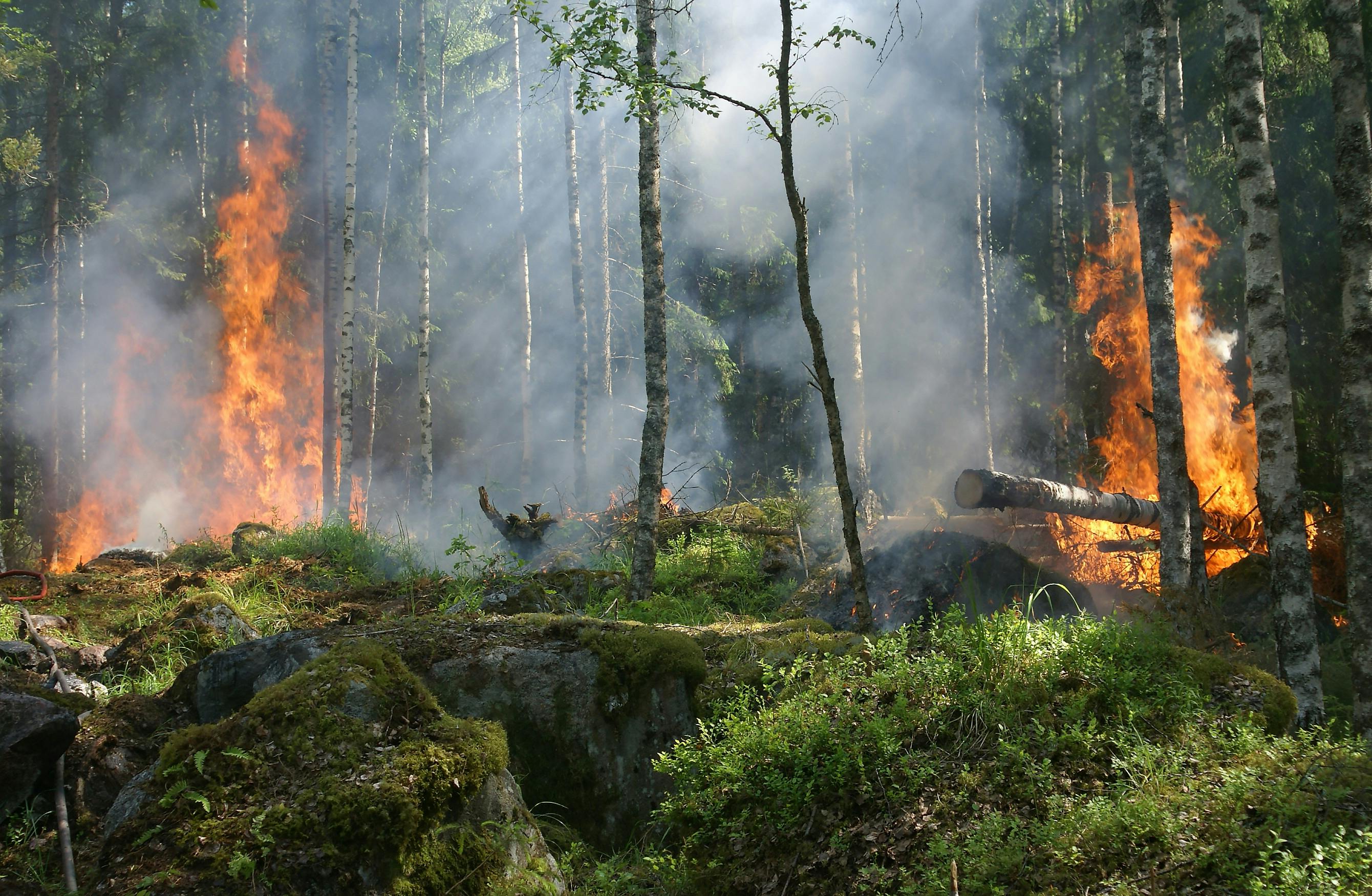
When Rebecca Gentry first walked her family’s ranch after the PF Fire in 2021, the land she grew up on was almost unrecognizable. The rolling, golden hills outside Hardin, Montana, normally dotted with ponderosa pines and cattle, had been scorched to a uniform gray. The soil still smoked, and in place of trees there were empty craters. More than 50,000 of her trees were gone almost overnight, casualties of a wildfire season supercharged by a hotter, drier climate.
Four years later, the same hills now hide something that could shape the way we deal with both wildfires and carbon pollution. On a slope above the ranch, Mast Reforestation has finished filling a 22-foot-deep trench with charred trunks from the fire. More than 10 million pounds of burned wood have been stacked, covered in layers of soil, gravel and a synthetic cap, and effectively entombed. According to an investigation by Inside Climate News, this is the first biomass burial project in the United States that is directly tied to restoring a wildfire-scarred landscape, and one of the most closely watched carbon removal pilots in the country today Is Burying the Trees Killed by Wildfires a Climate Solution?.
The basic idea is surprisingly simple. Dead trees are made of carbon pulled from the atmosphere as they grew. Left above ground, that carbon goes back into the air as the wood rots or burns. But if you bury the biomass in a dry, oxygen-poor, cool environment, decomposition slows dramatically. The wood can persist for centuries, effectively becoming a long-lived carbon vault. One team of scientists even found a 3,775-year-old cedar log preserved in clay-rich Canadian soil, with about 95 percent of its carbon still intact, suggesting that under the right conditions buried wood can last for millennia study.
Mast’s Montana project turns this low-tech logic into a business model. The buried trees on Gentry’s ranch will generate roughly 5,000 tons of carbon removal credits that the company hopes to sell at prices similar to biochar — often listed publicly in the $100 to $200 per ton range. Buyers, typically companies trying to meet climate targets or advertise “carbon-neutral” products, pay for the service of keeping that carbon out of the air. The revenue, Mast says, will fund replanting of new ponderosa pines across the ranch, creating a direct link between locking away yesterday’s emissions and restoring tomorrow’s forest Inside Climate News report and Mast’s MT1 project page.
Mast is not alone. Arkansas-based Graphyte dries sawdust and mill waste, presses it into dense bricks, wraps them in impermeable barriers and buries them underground, a process it calls “Carbon Casting.” The company says it can deliver durable carbon removal for around $100 per ton of CO2, with aims to scale toward billions of tons over time Graphyte overview and physicsworld explainer. In Colorado, Wood Cache works with waste from forest-thinning operations, burying small-diameter logs that have little value as lumber and using careful monitoring to issue removal credits under a woody biomass burial methodology backed by registry Puro.earth Wood Cache and woody biomass burial briefing.
What makes these projects feel urgent rather than experimental is the wildfire backdrop they are operating against. As the planet warms, fire seasons are stretching longer and burning hotter. In 2023 alone, extreme fires in Canada torched more than 18 million hectares and released roughly 640 million metric tons of carbon — comparable to the annual fossil fuel emissions of a large industrialized country, according to NASA and Nature-based analyses NASA study and Nature paper. Globally, wildfires in the 2023–24 season emitted some 8.6 billion tons of CO2, about 16 percent above the long-term average, locking in additional warming and smoke pollution that will haunt communities for years Earth System Science Data “State of Wildfires” and news summary.
In that context, the choice facing many landowners after a megafire is blunt. There is often no nearby sawmill to take the damaged wood, and transportation costs can be ruinous. The usual solution is to pile the dead trees and burn them, which does reduce future fuel loads but instantly dumps their stored carbon and choking smoke back into the air. Mast and other biomass burial companies are pitching an alternative: bury the waste instead of burning it, and turn what would have been an uncontrolled carbon pulse into a measurable, verifiable climate service Mast biomass burial explainer and Montana TV report.
Technically, the burial process is more engineered than just digging a hole. On the Gentry ranch, crews separated topsoil, loaded the pit with charred trunks, and then replaced layers of soil and gravel before adding a polypropylene cap designed to keep water out. Fungi and microbes inside the vault consume the remaining oxygen quickly, creating an anoxic pocket where decay largely stalls. Above ground, monitoring poles measure any gases escaping through the cover to ensure the wood stays stable. Mast promises at least 100 years of storage and argues that the real lifetime is likely much longer, especially if the chamber stays dry and undisturbed Inside Climate News and Mast MT1 update.
Economically, the appeal for carbon credit buyers is timing. Traditional forest-based credits only materialize as new trees grow big enough to store significant carbon, which can take a decade or more. By contrast, biomass burial creates “instant” removals: once the vault is sealed and verified, the carbon is locked away, and credits can be issued within a year. That helps companies looking for near-term removals to balance out emissions they cannot yet eliminate. It also addresses a major bottleneck in reforestation, where lack of upfront funding often slows or stops planting, especially across remote burn scars in the American West Inside Climate News story and World Bio Market Insights article.
But multiple experts caution that biomass burial only delivers a real climate benefit under strict conditions. First, the feedstock must be genuine “waste” that would otherwise be left to rot, pile-burned or used in very short-lived products. Cutting down healthy old-growth forests just to bury them would obviously be disastrous. Even in fire scars, if the wood can be turned into long-lived building materials, that often locks in more carbon while also displacing emissions from steel and concrete. In some cases, using biomass for biochar or certain biofuels may yield greater climate benefits, depending on how the products are used and what they replace Inside Climate News expert comments and Undark overview of biomass burial.
Second, the accounting has to be conservative. Carbon removal registries such as Puro.earth have begun to publish detailed methodologies for woody biomass burial, including how to measure the mass and moisture of the wood, how to model decay, and how to monitor vaults over time before issuing credits woody biomass burial methodology summary and Puro.earth listing. If project developers overestimate the durability of storage or fail to track leaks, credits could be sold that do not correspond to real-world climate benefits. Several scientists also warn against treating a 100-year guarantee as “permanent” in a world where climate change is expected to unfold over many centuries.
There is also the question of scale. Some modeling work suggests that “wood vaulting” — burying low-value forest residues and thinning slash under favorable conditions — could theoretically remove up to 12 billion tons of CO2 per year worldwide if fully exploited, making it one of the largest potential carbon removal pathways on paper Scientific American feature. But that upper bound assumes no conflicts with habitat protection, soil health, or competing uses for biomass, and that suitable sites and funding exist on every continent. In reality, biomass burial will likely remain a niche solution, best suited to particular contexts like post-wildfire cleanup, beetle-killed timber and forest thinning for fire prevention.
Still, the niche itself could be important. Across Montana alone, Mast estimates that recent wildfires have left about 2.3 million tons of dead, burned trees that are difficult to use and expensive to remove — enough wood to fill more than 57,000 logging trucks Mast biomass burial article. Other regions face similar problems as megafires and drought stress forests from the American West to the Mediterranean and Siberia. If burying some of that waste can both reduce future fire risk and keep significant amounts of carbon out of the atmosphere, it may play a small but timely role in slowing the vicious feedback loop between climate change and wildfire.
On Gentry’s ranch, the changes are already visible. Grass is reclaiming the hill where the vault was dug. In the coming planting season, crews will return with ponderosa seedlings grown from regional seed sources, trying to rebuild a more resilient forest mosaic than the one that burned. The most important part of the project may be what visitors cannot see: a buried mass of burned wood that is not sending thousands of tons of carbon dioxide into the sky.
Whether biomass burial becomes a widely used climate tool will depend on what happens next. Regulators will have to decide how to treat these credits in carbon markets. Independent scientists will need to scrutinize long-term monitoring data. Policymakers must ensure the approach does not become a license to keep emitting fossil fuels elsewhere. Because even if we bury every scrap of waste wood we can find, it will never be enough to counter the flood of CO2 from coal, oil and gas.
In that sense, the Montana vault is both a hopeful and sobering symbol. It shows how ingenuity can wring climate benefits out of disaster — turning a ghost forest into funding for regrowth and a temporary brake on warming. But it also reminds us that we are already deep into an era where simple “win-win-win” fixes rarely exist. Biomass burial can help in the right places, at the right scale, with strict safeguards. The real emergency remains unchanged: without rapid cuts in fossil fuel use this decade, no amount of buried wood will keep our future from going up in flames.