Ethics at COP30? Brazil’s climate summit collides with reality

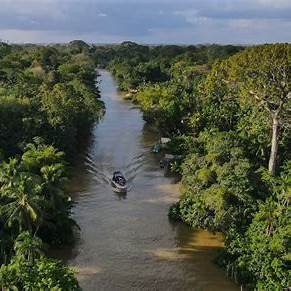
As negotiators gather in Belém for COP30, Brazil is trying to brand this summit as a historic course correction on climate – and even as the moment when ethics finally enter the heart of global negotiations through a new Global Ethical Stocktake. Yet on the ground, the “Amazon COP” is being built on fresh destruction: a four-lane highway slicing through remaining rainforest, dozens of construction projects, and the rapid approval of new offshore oil drilling near the mouth of the Amazon. At the same time, a controversial “devastation bill” has weakened environmental licensing just as Brazil’s emissions, deforestation and wildfire impacts remain alarmingly high. Indigenous leaders and social movements are already clashing with security forces to make themselves heard. What happens in Belém in the coming days will help decide whether the Amazon becomes a symbol of protection – or a warning from a world that chose delay over survival.
COP30 was supposed to be the moment the world finally listened to the Amazon. For the first time, a UN climate summit is being held in Belém, deep in Brazil’s rainforest region, on the tenth anniversary of the Paris Agreement. Organisers call it the “Amazon COP” and speak of justice, ethics and protection. “Climate is our biggest war,” says Ana Toni, chief executive of COP30, urging leaders to turn this summit into a delivery moment, not just another photo opportunity. But as delegates fly in, the gap between the narrative and the reality on the ground is becoming impossible to ignore.
At the centre of Brazil’s storytelling is a new initiative: the Global Ethical Stocktake. Launched jointly by President Luiz Inácio Lula da Silva and UN Secretary-General António Guterres, it is designed to sit alongside the UN’s technical Global Stocktake and ask a different set of questions: whose lives are being sacrificed, whose voices are missing, and what does a “fair share” of climate action really mean? According to the official presentation from Brazil’s Environment Ministry, the process is framed as “an urgent ethical call” that demands courage, listening and socio-environmental commitment, with regional dialogues on every continent feeding into a global synthesis report that will be handed to the COP30 presidency as political guidance. Presentation on the Global Ethical Stocktake and the official launch notes describe it as a way to bring human rights, democracy and moral responsibility directly into climate decision-making, rather than leaving negotiations to spreadsheets and loopholes. Overview of the Global Ethical Stocktake Event description Launch announcement :contentReference[oaicite:1]{index=1}
For many veteran climate figures, that ethical lens is long overdue. In a recent commentary, former UN Secretary-General Ban Ki-moon, ex-Irish president Mary Robinson and former UN climate chief Christiana Figueres argue that the current COP process is “no longer fit for purpose”, pointing to decades of unfulfilled promises and rising emissions even as climate impacts intensify worldwide. Their warning, echoed in analysis published by The Ecologist and Common Dreams, is blunt: without a rapid fossil-fuel phase-out, no amount of careful wording or clever accounting can keep the Paris targets alive. ‘Change is happening, it’s just painfully slow’ COP30: Climate course-correction or another collision course? :contentReference[oaicite:2]{index=2}
Belém itself has become a symbol of that contradiction. The city, already struggling with poverty, flooding and inadequate basic services, has been turned into a giant construction site to welcome an expected 50,000–70,000 visitors. Alongside more than 30 major building projects, including port works for cruise ships and an expanded conference complex, authorities are pushing through a new four-lane highway that cuts straight through protected rainforest on the edge of the city. Investigations by Mongabay and others show how this road fragments one of the last substantial tracts of urban forest, threatening wildlife corridors and local communities while being marketed as an allegedly “sustainable” solution complete with bike lanes and solar-powered lighting. Belém faces its social and natural demons as host to COP30 COP30: Climate course-correction or another collision course? :contentReference[oaicite:3]{index=3}
Media reports suggest that around 100,000 trees have already been felled to clear the route and associated works – a staggering act of destruction in the very biome the summit claims to defend. One tabloid report, backed by satellite images and local testimony, describes heavy machinery turning once-intact forest into bare earth for the conference highway, even as state officials insist the project is “green” and “modern”. Report on trees felled for COP30 highway :contentReference[oaicite:4]{index=4} At the same time, hotel prices have soared so sharply that the UN climate secretariat has asked its own agencies to cut delegation sizes, and some poorer countries are struggling to find affordable accommodation at all. UN limits staff at COP30 over accommodation concerns For residents living in precarious stilt houses over polluted waterways, the influx of billions of reais for roads, airports and luxury hotels feels like yet another example of climate money bypassing those most at risk.
The promised “people’s COP” is already being tested on the streets. After three climate conferences in countries that tightly restricted protests, Brazilian authorities have emphasised that civil society and Indigenous delegations will be more visible than ever this year. Preview of Indigenous participation at COP30 :contentReference[oaicite:6]{index=6} But tension has spiked as Indigenous activists and social movements demand that the summit confront, rather than obscure, the realities of oil expansion and land grabbing in the Amazon. In the first days of COP30, dozens of Indigenous protesters breached security at the main venue, storming into the UN “blue zone” with banners declaring “Our forests are not for sale” before being pushed back by guards. Indigenous protesters clash with security at COP30 Indigenous activists storm COP30 climate summit in Brazil, demanding action Report on clashes at COP30 venue :contentReference[oaicite:7]{index=7} For many, this confrontation sums up the deeper conflict at COP30: can a summit built on new highways, oil rigs and weakened protections ever deliver climate justice?
Brazil’s own climate record illustrates the stakes. According to national monitoring network SEEG, the country emitted roughly 2.3 billion tonnes of greenhouse gases in 2023, contributing over 4% of the global total and placing it among the world’s top six emitters. Mercopress summary of SEEG data Climate change in Brazil – emissions overview :contentReference[oaicite:8]{index=8} Unlike many industrialised nations, a large share of Brazil’s emissions still comes from deforestation and land-use change rather than energy alone. In May 2025, satellite data showed Amazon deforestation in Brazil surging by 92% compared with the same month a year earlier, wiping out an area larger than New York City in just four weeks. Officials blamed a combination of fires, land speculation and enforcement gaps – a worrying reversal after early progress on cutting forest loss under Lula’s current term. Report on May 2025 deforestation spike :contentReference[oaicite:9]{index=9}
Methane emissions, driven largely by Brazil’s huge cattle herd, are also climbing. A recent analysis by the Climate Observatory found a 6% increase in methane between 2020 and 2023, equivalent to hundreds of millions of tonnes of CO₂ when accounting for methane’s far greater heat-trapping power. Reuters summary of Brazil methane report :contentReference[oaicite:10]{index=10} At the same time, the Amazon itself is losing resilience. Research summarised by Le Monde suggests that roughly 17% of Brazil’s portion of the forest has already been cleared, with degradation from fires, logging and droughts pushing parts of the biome towards a tipping point beyond which large areas could permanently shift to savanna-like conditions. How healthy is the Amazon? :contentReference[oaicite:11]{index=11} If that happens, the Amazon could flip from a vital carbon sink to a major long-term source of greenhouse gases, undermining climate stability worldwide.
Instead of closing off new fossil-fuel frontiers, Brazil’s Congress has pushed in the opposite direction. In mid-2025 lawmakers approved PL 2.159/2021, quickly dubbed the “devastation bill” by environmental groups, which dramatically rewrites environmental licensing rules. The law allows “strategic” projects to be fast-tracked and weakens the role of technical agencies and Indigenous institutions in scrutinising risky developments. Critics warn it could trigger a wave of mining, agribusiness and infrastructure schemes with limited oversight. Brazil passes ‘devastation bill’ that drastically weakens environmental law Scientific analysis of licensing rollback :contentReference[oaicite:12]{index=12}
Under heavy pressure, President Lula did veto some of the most extreme self-licensing provisions – such as a clause that would have allowed many medium-impact projects to obtain permits by simply ticking boxes on an online form – but he signed the core of the bill into law. Crucially, he preserved a new category of “special environmental licence” for projects declared strategic by the federal government, a tool that campaigners fear will be used to speed up oil exploration along the Amazon coast. Brazil’s president signs environmental ‘devastation bill’ but vetoes key articles Commentary on self-licensing and strategic projects :contentReference[oaicite:13]{index=13} Legal scholars describe this as the most significant weakening of Brazil’s environmental safeguards in four decades, and a direct threat to the country’s pledge to end deforestation by 2030.
The consequences are already visible just offshore. Less than a month before COP30, Brazil’s environmental agency IBAMA authorised state-owned oil company Petrobras to begin exploratory drilling in the Foz do Amazonas basin, about 175–200 kilometres from the mouth of the Amazon River. Reuters report on IBAMA approval AP report on government approval of Amazon drilling :contentReference[oaicite:14]{index=14} The area is home to mangroves, coral-like reef systems and rich fisheries that sustain Indigenous, quilombola and traditional coastal communities. IBAMA’s own technical staff had previously recommended against granting a licence, citing incomplete plans to protect wildlife from potential oil spills and the difficulty of mounting a clean-up operation in such complex ocean currents. Earlier IBAMA staff recommendation against drilling Greenpeace statement on IBAMA licence :contentReference[oaicite:15]{index=15} Environmentalists now warn that any major spill could devastate marine ecosystems and coastal livelihoods, while locking Brazil into new fossil-fuel infrastructure that will operate far beyond the window for keeping global heating to 1.5°C.
Behind these decisions lies a powerful financial current. A new analysis by Stand.earth, “Banks vs. the Amazon”, finds that banks have provided more than $15 billion in direct financing for Amazon oil and gas since the Paris Agreement was signed in 2016, with $2 billion added between early 2024 and mid-2025 alone. Banks vs. the Amazon – Stand.earth Mongabay summary on bank financing :contentReference[oaicite:16]{index=16} Much of this recent money has gone to just six companies, including Petrobras. The Ecologist and other outlets note that this surge in fossil-fuel finance coincided almost exactly with the new drilling licence at the Amazon’s mouth, underlining how rapidly industry and investors still move when barriers fall. Report on new $2 billion in Amazon oil and gas financing Banks pour $2 billion more into Amazon oil and gas as COP30 nears :contentReference[oaicite:17]{index=17}
The scale of what is at stake is almost unimaginably large. Experts consulted by the Fossil Fuel Non-Proliferation Treaty initiative and Mongabay estimate that the Brazilian Amazon may sit atop as many as 60 billion barrels of oil. If those reserves were fully exploited and burned, they could release around 24 billion tonnes of CO₂ – more than Brazil’s entire national emissions over the last eleven years, and close to half of one year’s current global emissions. Analysis of Brazil’s Amazon oil reserves and emissions Coverage of Amazon fossil risks :contentReference[oaicite:18]{index=18} In a year when UNEP and independent analysts warn that global greenhouse gas emissions are still inching upwards, the idea of opening a whole new oil frontier in the world’s largest rainforest feels, to many, like a direct assault on the Paris goals. Global emissions 2023 overview :contentReference[oaicite:19]{index=19}
And the forest is already burning. A recent wildfire assessment found that carbon emissions from extreme fires rose by 9% in 2024, driven largely by unprecedented blazes in South America and Canada. In the Amazon, an estimated 44 million acres burned – a 66% increase on the previous year – with Brazil among the hardest-hit countries. Wildfire emissions report :contentReference[oaicite:20]{index=20} Smoke choked cities, respiratory illnesses surged, and the fires released climate-heating pollution on a scale comparable to the annual emissions of many entire nations. Scientists warn that continued warming, combined with deforestation and degradation, is turning parts of the Amazon into a self-reinforcing fire zone rather than a humid, fire-resistant rainforest.
Against this backdrop, the Global Ethical Stocktake is more than a philosophical exercise. It is a test: can leaders align their ethical language with the brutal arithmetic of carbon, forests and lives? Brazil argues that hosting COP30 in the Amazon is a sign of commitment – a chance to showcase falling deforestation in some recent years, new social programmes and an ambitious ecological transformation plan that includes restoring degraded pastures through initiatives like Eco Invest Brazil. Brazil’s Eco Invest auction plan Overview of Brazil’s COP30 themes :contentReference[oaicite:21]{index=21} Yet those positive signals are being overshadowed by ongoing fossil expansion, weakened safeguards and local communities who see billions flowing into airports and luxury ships while basic sanitation, health care and flood protection remain neglected.
For Amazonian peoples, the moral questions are anything but abstract. If the rainforest crosses a tipping point, it will not be negotiators in air-conditioned halls who suffer first, but riverside families watching fish stocks collapse, farmers losing crops to drought and heat, and city dwellers sweltering through deadly heatwaves and toxic smoke. In a deeply unequal country, those who have contributed least to the climate crisis stand to lose the most from its acceleration. That is why Indigenous leaders, social movements and many scientists say COP30 must not be remembered as just another summit of speeches and selfies, but as the moment when governments finally agreed to stop expanding fossil fuels in the Amazon and to protect the forest as a global common good.
Whether that happens will depend on decisions taken in Belém in the coming days: how countries rewrite their 2035 climate pledges, whether they agree to a rapid, fair fossil-fuel phase-out, how much finance is mobilised for forest protection and climate resilience, and whether Brazil itself is willing to walk away from new oil at the edge of the rainforest. Change is happening – but the science is brutally clear that it has not yet happened fast enough. COP30 will help determine whether the Amazon remains a living rainforest or becomes one more casualty of a planet that saw the danger, spoke about ethics, and still could not bring itself to slam on the brakes.