New [Model] Shows Warming Can Trigger Sudden Deep Freeze

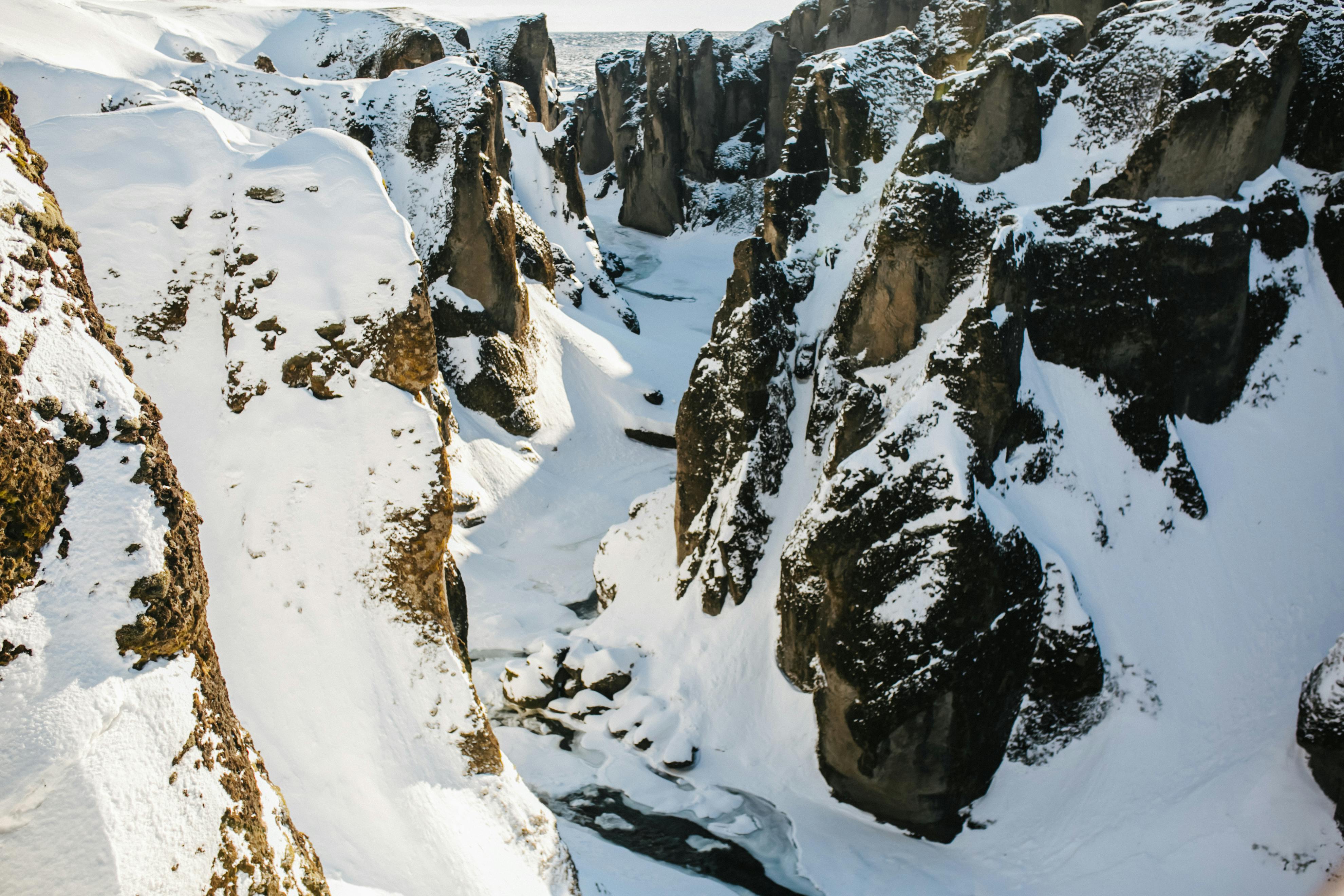
New climate research suggests that global warming could, over very long timescales, flip into a deep freeze instead of gently stabilising. Using an advanced Earth system model, scientists Dominik Hülse and Andy Ridgwell show that once a massive burst of carbon dioxide heats the planet, life in the oceans can overreact, stripping CO₂ from the air so aggressively that the world ends up far colder than it started. Their simulations help explain past “Snowball Earth” episodes, when ice reached almost from pole to pole. The same feedbacks could still exist today, but a more oxygen-rich atmosphere makes an extreme ice age less likely. Crucially, this is no escape hatch from today’s crisis: the cooling would take hundreds of thousands of years, while dangerous heat, rising seas and collapsing ecosystems hit within decades.
For decades, textbooks have described Earth’s climate as having a built-in safety device. When the planet warms, rainwater dissolves carbon dioxide from the air, reacts with silicate rocks, and washes carbon into the sea where it ends up locked away in limestone for millions of years. This “rock weathering thermostat” has long been seen as the quiet guardian that stops our world from turning into a runaway greenhouse. Now, new research suggests that this thermostat is not just slow – it can also misfire, driving the planet past balance and into an ice-age deep freeze.
The study, led by Dominik Hülse and Andy Ridgwell and published in Science under the title “Instability in the geological regulation of Earth’s climate,” uses an Earth system model that goes far beyond traditional rock-weathering calculations. It explicitly links the carbon cycle to nutrients such as phosphorus, the growth of algae in the oceans and the availability of oxygen in seawater. By doing so, it reveals that the biological “lungs” of the planet can overpower the geological “bones” that silicate weathering represents. Science
In the familiar story, extra CO₂ leads to more rock weathering, which slowly removes carbon from the atmosphere and cools the planet back down. But Hülse and Ridgwell’s model shows a second, faster thermostat kicking in as the climate heats up. Warmer, wetter conditions on land send more phosphorus and other nutrients into rivers and out to sea. Once there, they fuel explosive blooms of microscopic algae that suck carbon from the atmosphere through photosynthesis. When these organisms die, they sink to the seafloor, taking their carbon with them and burying it in sediments. ScienceDaily
This is where the system turns dangerous. In a warmer ocean, oxygen becomes scarcer, especially near the seabed. Low-oxygen conditions change the chemistry of the mud, causing phosphorus to be recycled back into the water instead of being buried. That recycled phosphorus then feeds more algae, which draw down more carbon and further starve the water of oxygen as they decompose. The model shows a runaway feedback: nutrients beget algae, algae strip out oxygen, low oxygen recycles more nutrients, and the whole engine spins faster. Meanwhile, vast quantities of carbon end up buried in seafloor sediments, dragging atmospheric CO₂ and global temperatures sharply downward. MARUM press release
In simulations where a large pulse of CO₂ is suddenly released – similar to what humanity is currently doing, but stretched over geological timescales – the classic rock-weathering thermostat alone simply nudges the climate back toward its starting point. When the nutrient-driven organic carbon feedback is switched on, the model behaves very differently. Instead of gently stabilising, the climate overshoots: after an initial warm spike, temperatures plunge well below the original baseline, and in some scenarios ice sheets expand so far that the planet slips into an ice age. Phys.org
These results help make sense of one of Earth’s biggest mysteries: the Snowball Earth episodes of the distant past, when geological evidence suggests ice may have reached almost to the equator. For years, scientists struggled to explain how a planet supposedly protected by the silicate weathering thermostat could become almost entirely frozen. The new work points to a missing piece – an “organic carbon thermostat” regulated by plankton, nutrients and oxygen. Under conditions that prevailed billions of years ago, when atmospheric oxygen was much lower, this biological control system appears to have been strong enough to overwhelm rock weathering and tip the world into extreme cold. ClimateAges overview
At first glance, this might sound strangely reassuring. If the planet has a hidden mechanism that eventually overcorrects warming and locks away carbon faster, doesn’t that mean today’s fossil-fuel binge will be cancelled out by nature in the end? Several popular write-ups of the research warn against this seductive misunderstanding. Yes, the newly identified feedback could in principle bring CO₂ levels back down more quickly than rock weathering alone – from roughly half a million years to perhaps a hundred thousand years or more – but that is still unimaginably slow compared with human timescales. LiveScience
In practical terms, this means that nothing in this study rescues us from the climate crisis unfolding right now. The heatwaves, floods, crop failures and ecosystem collapses that scientists warn about over the next few decades will not be “fixed” by deep-ocean chemistry. Those impacts are governed by the amount of CO₂ and other greenhouse gases we release in the 21st century and by how quickly we cut emissions down to zero. The natural feedbacks described in the new model simply operate too slowly to prevent those near-term damages.
The work instead delivers a much more unsettling message: Earth’s long-term climate control is not a gentle stabiliser but a system that can flip between very different states. By pushing so much carbon into the atmosphere in such a short time, humans are performing a huge and irreversible experiment on this system. The model suggests that the immediate result is intense warming, sea-level rise and shifting rainfall patterns – and only after hundreds of thousands of years might an overactive organic carbon thermostat drag the planet toward an opposite extreme.
The authors stress that conditions today differ from those during the ancient Snowball Earth events. Higher oxygen levels in modern oceans should weaken the nutrient-recycling feedback, making a full global freeze less likely. But weaker does not mean harmless. Even a “milder” overshoot in the distant future could mean large, slow swings in ice sheets, sea level and habitability that would reshape continents and ecosystems long after our civilisation is gone. SciTechDaily
Seen alongside other recent climate warnings, the implications are stark. While long-term feedbacks might eventually pull temperatures back down, they work on timescales many thousands of times longer than an election cycle or a human lifetime. Meanwhile, other tipping points – collapsing ice sheets, dying coral reefs, destabilised monsoon systems – may be crossed within years to decades if warming continues unchecked. Natural “self-correction” is simply too slow and too unpredictable to rely on as a safety net. ScienceDaily climate news
In that sense, the study closes one door and opens another. It closes the comforting myth that Earth’s geology will quietly solve the problem we are creating with fossil fuels in anything like a useful timeframe. But it opens a clearer view of just how fragile and dynamic our planet’s climate really is. Far from being a static backdrop, it is a living system in which rocks, microbes and oceans are constantly rewriting the rules.
The urgent takeaway is straightforward. The same processes that once may have plunged Earth into a frozen nightmare will not swoop in to spare us from the heat we are unleashing now. The only way to avoid catastrophic warming this century is to cut greenhouse gas emissions rapidly, protect and restore natural ecosystems and stop treating the planet’s “thermostat” as a get-out-of-jail-free card. Whether the next ice age begins in 50, 100 or 200 thousand years is a question for future geology. The decisions that matter are the ones we make in the next few years.