SpaceX Engine Hits Incredible New Mark, Boosts Starship.

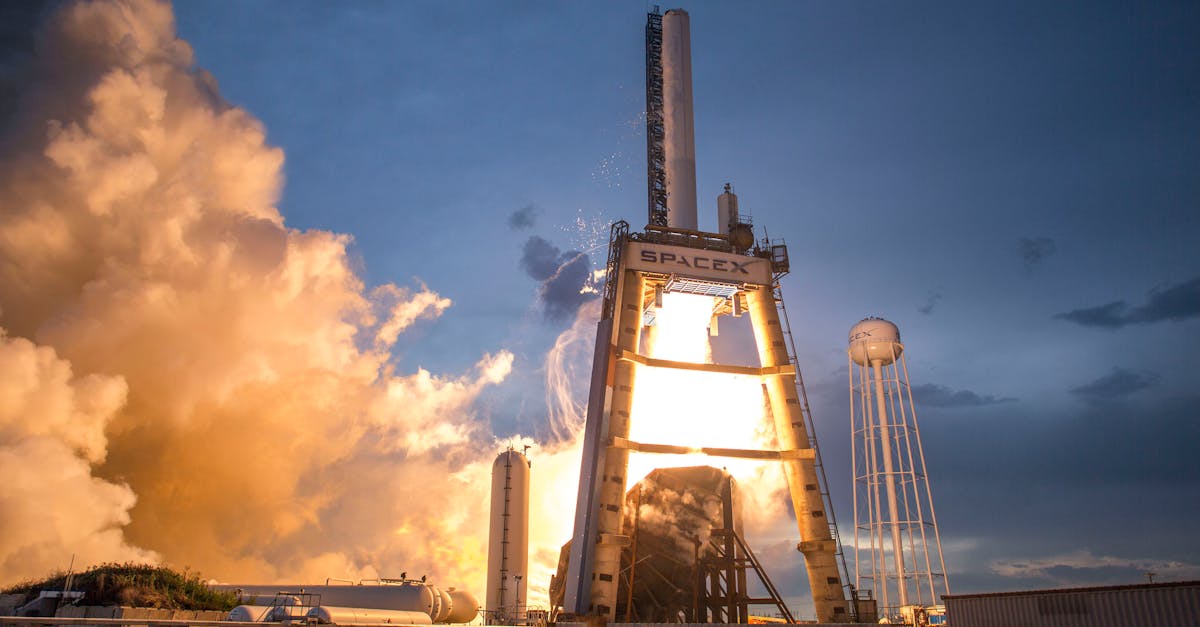
SpaceX is continually pushing the boundaries of rocket engineering with its Raptor engine series. CEO Elon Musk recently shared details about the upcoming Raptor 4 engine, which promises a substantial boost in power for the Starship and Super Heavy launch system. This next-generation engine is designed to deliver a staggering 300 metric tons of sea-level thrust, nearly doubling the initial Raptor 1's performance while maintaining a lean mass. Such advancements are crucial for enabling heavier payloads, orbital refueling, and ambitious future missions to the Moon and Mars.
The evolution of SpaceX's Raptor engine family showcases remarkable engineering progress. From Raptor 1's 185 metric tons of thrust, the engine's power has steadily climbed through Raptor 2 and Raptor 3, while its mass has simultaneously decreased. The upcoming Raptor 4 is expected to reach an impressive 300 metric tons of sea-level thrust at roughly the same mass as its predecessor, a testament to relentless innovation. This means more power for less weight, significantly enhancing the engine's efficiency.
For the Super Heavy booster, which uses 33 Raptor engines, this jump to 300-ton Raptor 4s translates to a phenomenal 9,900 metric tons of total liftoff thrust. This is nearly three times the power of the legendary Saturn V rocket. This immense force is vital because sea-level thrust is the power available the moment a rocket leaves the pad, when it is heaviest and fighting Earth's dense atmosphere and gravity.
Higher liftoff thrust directly improves the rocket's initial acceleration, allowing it to escape Earth's gravity faster. This shortens the critical early minutes of flight, reducing "gravity losses" and preserving more precious propellant for reaching orbital velocity or carrying extra cargo. Since Super Heavy's engine count is fixed by its size, increasing the thrust per engine is the most effective way to boost overall performance without a complete redesign. These advancements are essential for fulfilling Starship's ambitious goals, including transporting over 100 tons to orbit, enabling complex orbital refueling operations, and ultimately paving the way for human missions to the Moon and Mars. It brings large-scale, reusable space transport closer to reality.