Tesla AI Reveals One Surprising Truth About Human Driving!
Tesla's Full Self-Driving (FSD) technology and its Robotaxi service are increasingly showing that artificial intelligence can often drive better and safer than humans. Users in cities like Austin and the Bay Area are reporting more comfortable, reliable, and even more affordable rides compared to traditional ride-sharing options. This advanced self-driving capability is not just about convenience; it highlights a significant path toward drastically improving road safety for everyone. With tens of thousands of lives lost annually in crashes and thousands more affected by drowsy driving, the shift towards autonomous vehicles offers a powerful solution to these pressing human-caused problems.
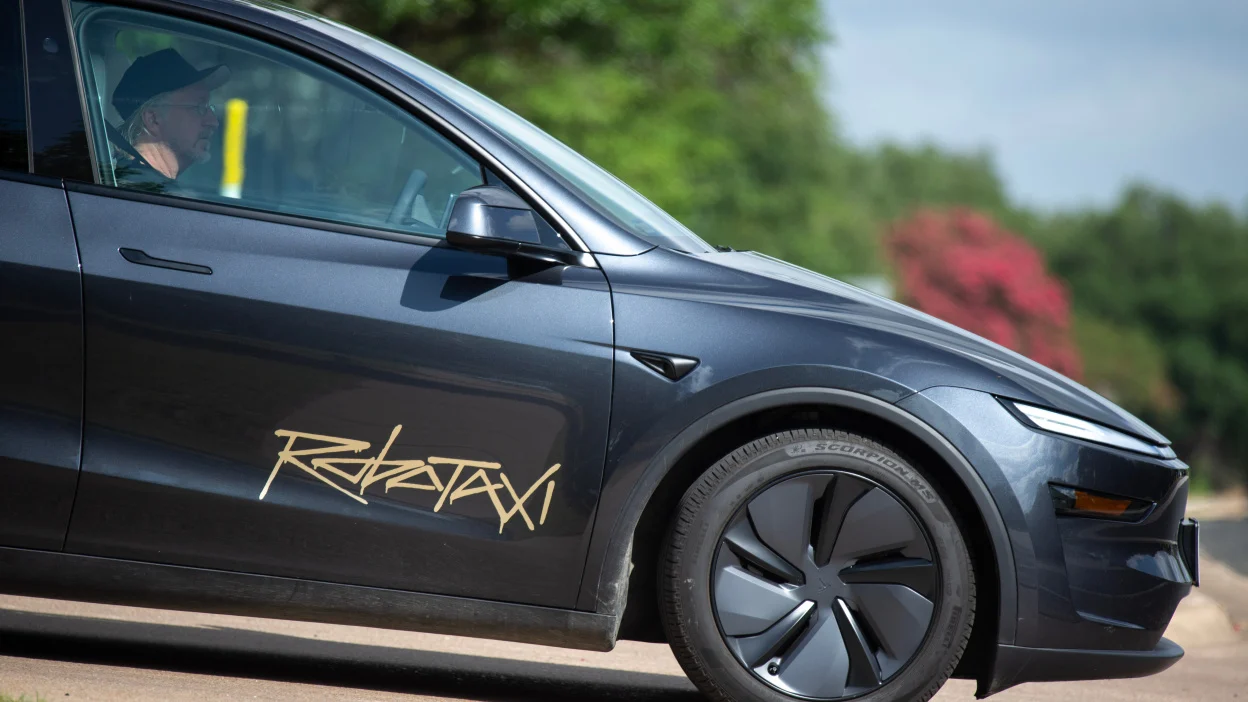
Tesla's Robotaxi service, currently available in limited areas like Austin and the Bay Area, is already impressing users. Many find the service not only more affordable than traditional options like Uber but also praise its smooth and consistent driving. Some experienced Tesla owners even suggest that the FSD system now drives more competently than many human drivers, offering a significantly more comfortable ride experience.
The latest FSD V14 update seems to be a game-changer, earning widespread positive feedback. One owner described how their car executed a U-turn with a precision that surpassed human capability. Another striking example captured in a video showed a safety monitor of a Bay Area Robotaxi falling asleep in the driver's seat while the vehicle safely navigated its route. This remarkable stability highlights the system's robust design.
These real-world observations underscore a critical point: Tesla's dedication to autonomous driving promises much safer roads for everyone. Consider the grim statistics: in 2023, there were 40,901 deaths from motor vehicle crashes in the United States, according to the IIHS. Furthermore, the NHTSA estimated that 91,000 police-reported crashes involved drowsy drivers in 2017, leading to thousands of injuries and 800 deaths. By taking human error out of the equation, FSD has the potential to significantly lower these tragic figures and make our daily commutes much safer.