Texas's Next Mega-Facility Shows Off Its Driverless Future

Elon Musk recently shared a compelling video showcasing the future vision for Terafab, a colossal new facility planned for Grimes County, Texas. This render highlights not only the stunning architecture but also upcoming advancements like the driverless Robovan for cargo and passengers, alongside the Tesla Semi and Cybercab. The video also features Optimus robots, central to the facility's operations. This ambitious project signals a significant leap toward highly automated, electric, and environmentally conscious industrial infrastructure, demonstrating a bold step in sustainable technology and global manufacturing.
A new video released by Elon Musk offers a sneak peek into Terafab Texas, a massive new facility described as potentially the "largest and most valuable building on Earth." Set to be built in Grimes County, this $16.8 billion project aims to redefine industrial architecture and efficiency. The render showcases a futuristic design with sharp angles and illuminated bands, alongside plazas and reflecting pools, a stark contrast to traditional utilitarian factory aesthetics. This vision emphasizes a future where infrastructure is both highly functional and visually striking, pushing the boundaries of what large-scale industrial complexes can be. This type of groundbreaking development can pave the way for more integrated and environmentally thoughtful urban and industrial planning.
Central to the Terafab vision are advanced electric vehicles designed for efficiency and sustainability. The driverless Robovan, first unveiled in 2024, is depicted gliding along an elevated roadway within the facility. This versatile vehicle, designed to move up to 20 passengers or significant cargo, operates without a steering wheel or pedals, promising incredibly low costs per mile. It stands alongside the electric Tesla Semi and Cybercab, underscoring a commitment to fully electric, automated transportation solutions. These innovations highlight the immense benefits of electrification, offering cleaner, quieter, and potentially more efficient alternatives to traditional fossil-fuel-dependent logistics, crucial for reducing our carbon footprint and combating global warming.
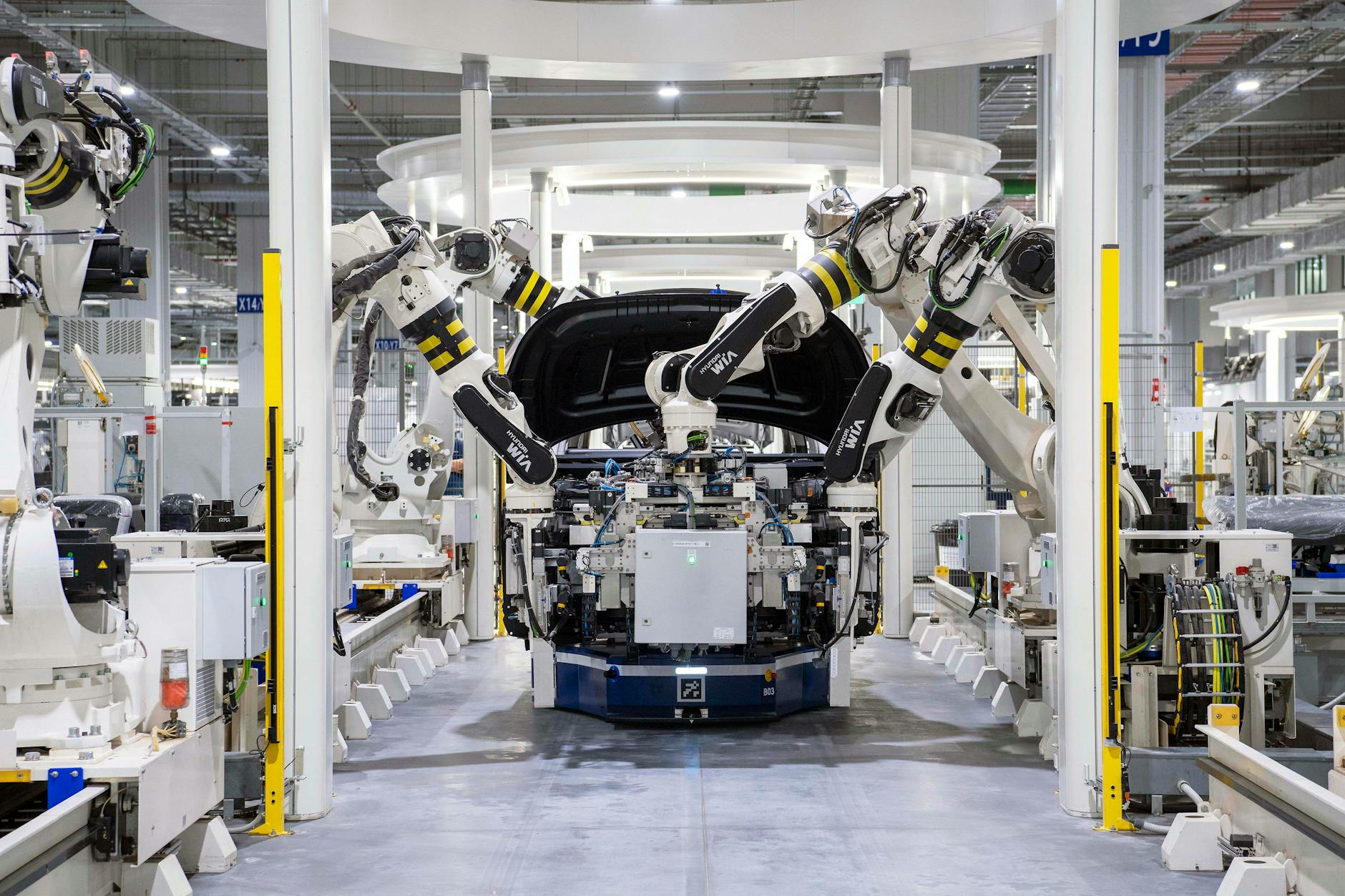
The facility also illustrates a future powered by advanced robotics. Tesla’s Optimus robots are shown actively working the grounds, reflecting their growing importance in automated operations. Production for Optimus is already underway, with plans for a massive plant at Giga Texas targeting volume production by summer 2027 and an eventual capacity of 10 million units annually. Musk views Optimus as Tesla’s most significant product, with a long-term goal of making these robots widely available at an accessible price. Integrating such advanced robotics into industrial processes can dramatically boost efficiency and pave the way for a new era of sustainable manufacturing, reducing waste and optimizing resource use, which is vital for environmental protection and a greener future.
This grand vision for Terafab, with its blend of cutting-edge design, driverless electric vehicles, and intelligent robotics, represents a significant step towards a highly automated and sustainable future. Such projects demonstrate how innovative technology can drive progress in addressing environmental challenges and shaping a world powered by clean energy and intelligent solutions. The urgency of transitioning to such sustainable models becomes ever clearer as we face the impacts of global warming.