The World Just Lost Its Climate Leader. Now What?

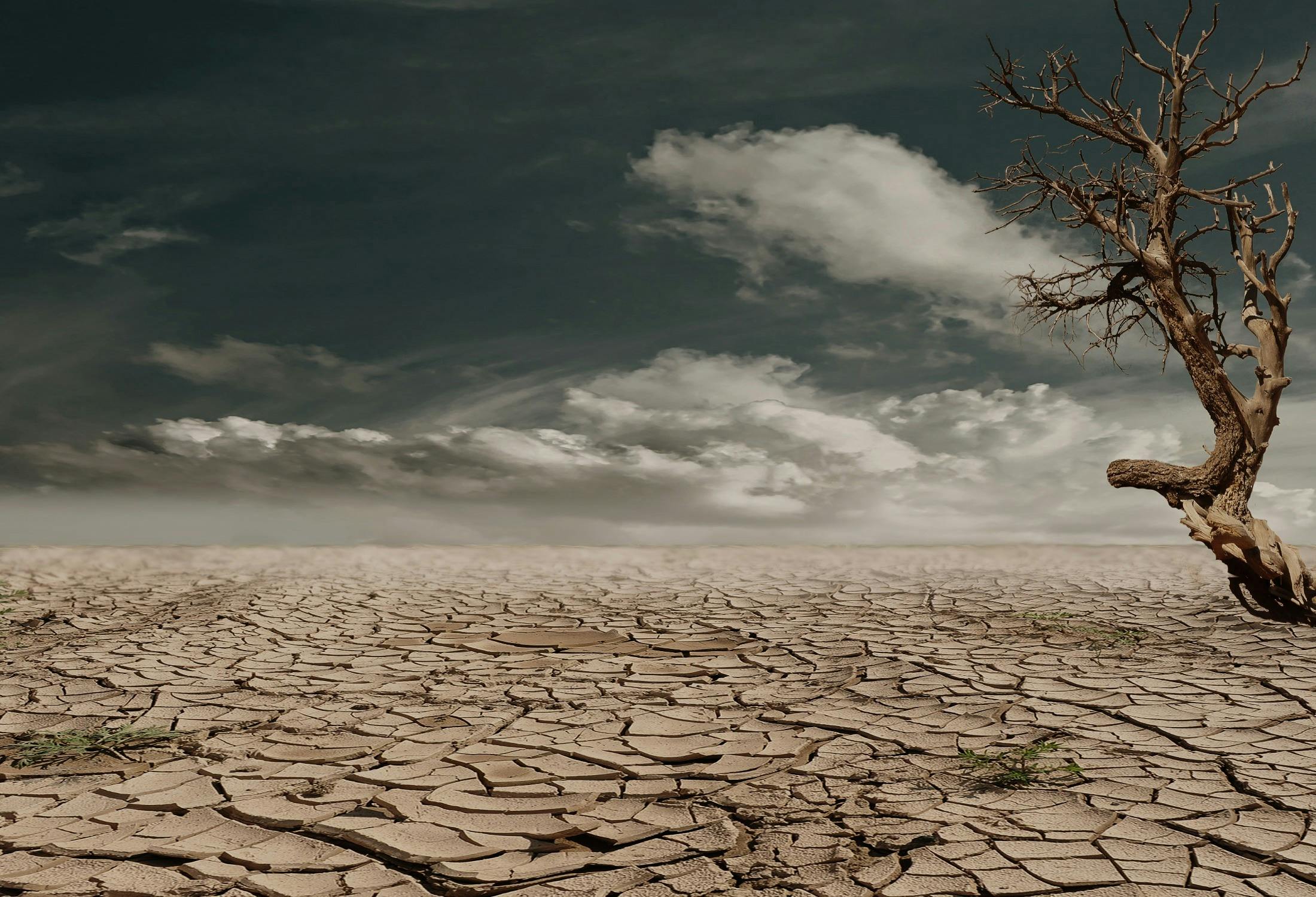
At the U.N. climate summit in Belém, Brazil, the most striking thing may be the empty chair: for the first time in three decades of climate diplomacy, the United States has not sent any top officials. As President Trump withdraws from the Paris Agreement for a second time and tears up U.S. pledges to cut fossil fuel use, the world is left asking whether the fight to stabilize the climate can succeed without its richest country and largest oil and gas exporter. New U.N. analyses show that even if governments deliver on their current promises, the planet is heading for roughly 2.5 to 2.9 degrees Celsius of warming — far beyond the Paris targets and deep into danger. Yet other powers are already moving: China’s clean-tech boom, record global investment in renewables and rising climate leadership from vulnerable countries are beginning to redraw the map of climate power. The stakes could not be higher, because 2024 was the hottest year ever recorded and the window to avoid irreversible damage is closing fast.
The latest round of U.N. climate talks is unfolding in Belém, at the edge of the Amazon rainforest. These meetings were meant to be a moment of collective reckoning: a chance for governments to show how they will keep the promises they made in Paris ten years ago and prevent climate chaos from spiralling out of control. Instead, one of the most powerful symbols at COP30 is absence. For the first time since global climate summits began 30 years ago, the United States has chosen not to send any senior officials, as reported in the original New York Times article “Tackling Climate Change Without the U.S.”.
The timing could hardly be more alarming. The U.N. Environment Programme’s latest Emissions Gap Report 2025: Off Target concludes that even if countries fully implement their existing pledges, the world is still on track for roughly 2.5–2.9 degrees Celsius of warming this century, far beyond the “well below 2°C” and 1.5°C goals agreed in Paris. A companion overview from the U.N. climate secretariat stresses that current national climate plans fall far short of what would be needed to keep warming to safer levels, despite modest improvements since 2015 UN climate reports overview. In other words, even with everyone playing, we are still losing – and now the biggest historical emitter is stepping off the field.
Under Trump’s renewed leadership, the U.S. is doing more than just staying on the sidelines. The administration is in the process of withdrawing again from the Paris Agreement and has scrapped many of America’s own commitments to phase down fossil fuels at home, according to the New York Times summary “Tackling Climate Change Without the U.S.”. U.S. negotiators have also used their weight to derail other countries’ efforts, blocking a global cap on petroleum-based plastics and torpedoing the first serious proposal for a worldwide tax on shipping emissions, measures that would have reined in two rapidly growing sources of greenhouse gases.
Some diplomats argue that negotiations might even be more straightforward without Washington’s constant veto power and domestic political drama. But the numbers reveal why the U.S. still matters enormously. It remains the world’s largest producer of oil and, as recent data from the U.S. Energy Information Administration show, was also the top exporter of liquefied natural gas in 2024, shipping about 11.9 billion cubic feet per day EIA LNG analysis. Just last month, the U.S. became the first country ever to send more than 10 million tonnes of LNG abroad in a single month Reuters LNG record. As long as that fossil fuel juggernaut is expanding, it will be harder and more expensive for others to keep global warming in check.
Money is another reason the U.S. still looms so large. Poorer nations, which have contributed very little to the climate problem, rely on wealthier countries to help fund resilient infrastructure, early-warning systems, and a just transition away from coal, oil and gas. The Brazilian COP30 presidency’s new “Baku to Belém roadmap” sketches out how climate finance could reach at least $1.3 trillion per year by 2035, but that kind of scale is extremely hard to imagine without substantial U.S. contributions and leadership. Instead, Washington is currently moving in the opposite direction, slashing international climate funding even as climate disasters grow more brutal and frequent.
At the same time, a new climate superpower is emerging. China, now the world’s largest emitter, has become indispensable to the clean-energy revolution. An analysis in The Economist notes that China is already earning more from exporting green technologies like solar panels, batteries and electric vehicles than the U.S. makes from exporting fossil fuels China’s clean-energy revolution. Detailed trade data compiled by Carbon Brief show that China exported roughly $177 billion in clean-energy hardware in 2024 alone, including solar modules, EVs, batteries and wind turbines China’s 2024 clean-energy exports.
Beijing also dominates much of the global manufacturing base: a recent study from the Bruegel think tank estimates that China produces around 92 percent of the world’s solar modules and over 80 percent of its wind turbines China’s role in renewable manufacturing. That sheer scale has driven down prices, making it possible for countries like Brazil, India, South Africa and others to install wind farms and solar parks at record speed. In India, for example, more than half of all power-generation capacity is now from solar, wind and hydropower, a shift that would have been unthinkable a decade ago without cheaper imported technology, as described in the original New York Times piece “Tackling Climate Change Without the U.S.”.
Global investment trends tell a similar story of change — and of how far we still have to go. The International Energy Agency estimates that spending on clean-energy technologies and infrastructure is set to reach around $2 trillion in 2024, roughly twice the money flowing into fossil fuels IEA clean-energy investment. BloombergNEF puts total investment in the low-carbon transition at a record $2.1 trillion in 2024, more than double the level in 2020 BNEF energy-transition investment. Yet the latest Emissions Gap Report 2024 shows that, without much deeper cuts this decade, those investments will still leave the world heading for around 2.6–3.1 degrees of warming, a level scientists warn would unleash catastrophic impacts.
Those impacts are no longer hypothetical. In 2024, the planet crossed a new and deeply worrying threshold: multiple scientific agencies, including the World Meteorological Organization and the EU’s Copernicus Climate Change Service, have confirmed that 2024 was the hottest year ever recorded and the first full year with global average temperatures more than 1.5 degrees above pre-industrial levels WMO 2024 temperature record, Copernicus 2024 climate report. Heat waves killed election workers in India and pilgrims on the hajj in Saudi Arabia, while wildfires, floods and storms caused devastation across every continent, as chronicled by global news reports and scientific assessments Reuters summary of 2024 heat.
On the ground, people are improvising to survive. The New York Times describes a women’s union in India that has set up a tiny insurance scheme to help informal workers cope when temperatures make outdoor labour dangerous, and farmers in Malawi and Uganda experimenting with new crops as the climate they once knew disappears “Tackling Climate Change Without the U.S.”. These are acts of resilience and solidarity — but they are also signs of a world being forced to adapt to changes it did not choose and often cannot afford.
That is why the question “Can the world tackle climate change without America?” is, in some ways, the wrong way round. Climate change is already reshaping lives, economies and ecosystems, whether the U.S. shows up or not. Vulnerable countries, from low-lying island states to drought-hit regions in Africa and Asia, are demanding faster action because they have no alternative. As one climate expert quoted by the New York Times put it, “We have to act with or without the U.S.” “Tackling Climate Change Without the U.S.”.
Yet saying the world must act without America is not the same as saying America no longer matters. U.S. decisions about drilling, pipelines, vehicle standards, power-sector rules and international finance will profoundly influence how quickly global emissions fall — or how long they keep rising. Walking away from Paris, sabotaging multilateral agreements and super-charging LNG exports all push the world closer to a future of permanent crisis. The absence of senior U.S. officials in Belém does not create a vacuum so much as it reveals one: a gap between what science demands, what vulnerable communities are pleading for and what the world’s most powerful nation is currently willing to do.
The talks in the Amazon will not, on their own, close that gap. But they are a crucial test of whether other countries — from China to the European Union, from coal-dependent India to emerging economies in Latin America and Africa — are ready to increase their ambitions, ramp up climate finance and phase out fossil fuels fast enough to keep hope alive. The science is brutally clear: every fraction of a degree avoided, every year of delay prevented, will save lives and ecosystems. The climate crisis does not pause for elections, trade wars or diplomatic snubs. Whether or not the U.S. chooses to lead, the rest of the world has no choice but to keep fighting to hold the line.