What vital factor is overlooked in a new Colorado River dam?

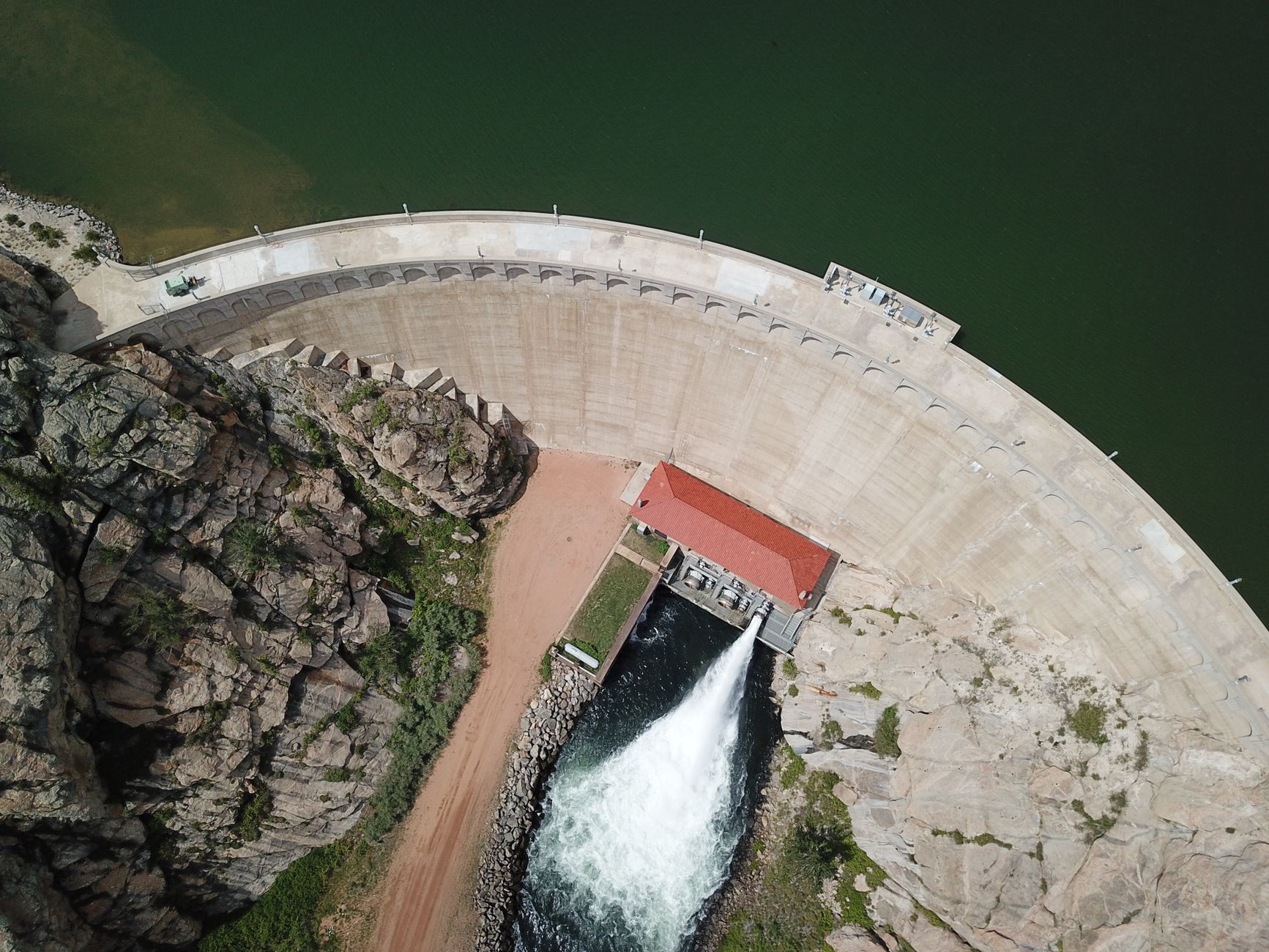
A pivotal legal battle is unfolding in the American West, questioning if a massive dam expansion on the already strained Colorado River can proceed without fully considering climate change impacts. Environmental groups are challenging Denver Water and the U.S. Army Corps of Engineers, arguing the river has no more water to spare, a stark reality underscored by a rapidly warming planet. This case in the 10th U.S. Circuit Court of Appeals could reshape how water resources are managed across seven states and for millions of people, making it a crucial test for integrating climate realities into major infrastructure decisions.
The heart of the dispute lies in the 10th U.S. Circuit Court of Appeals, where the U.S. Army Corps of Engineers and Denver Water are appealing a lower court's decision. That ruling sided with environmentalists, stating that major water projects must consider climate impacts and the over-allocation of the Colorado River. Denver Water aims to nearly triple the capacity of its Gross Reservoir, diverting an additional 77,000 acre-feet of water, enough for approximately 150,000 homes, to ensure drought resilience for a growing Denver. The utility argues the National Environmental Policy Act (NEPA) does not explicitly require climate change assessment for such projects.
However, environmental groups, led by Save the Colorado, contend that the river is already severely over-allocated and dwindling due to climate change. They fear the over $800 million expansion could become a "giant bathtub" with no water to fill it, especially if ongoing negotiations force states to make significant cuts to their water use. Experts in natural resource law support these concerns, highlighting that ignoring climate change now could severely weaken Colorado's position in future state-level water allocation disputes over the river.
Historically, the Colorado River Compact, established in 1922, famously over-allocated the river's water, a problem significantly exacerbated by modern climate change. The Upper Basin states (Colorado, New Mexico, Utah, Wyoming) and Lower Basin states (Arizona, California, Nevada) are each entitled to 7.5 million acre-feet, plus 1.5 million for Mexico. Yet, the river's average flow has recently dropped to just 11 million acre-feet, far less than allocated. This shortfall brings the system dangerously close to a "compact call," an unprecedented action that could trigger severe water curtailments, particularly for the Upper Basin, directly impacting projects like the Gross Reservoir expansion.
Critics argue that proceeding with such a project without fully evaluating climate impacts and alternative solutions means "repeating the same mistakes" that led to the West's current water crisis. They emphasize the importance of sustainable water management and underscore that the Colorado River, the lifeblood for nearly 40 million people, simply cannot sustain more diversions in a drier future. The court's decision will determine if climate change considerations can truly halt or reshape large-scale water infrastructure, setting a vital precedent for environmental protection and responsible resource management in the face of global warming.